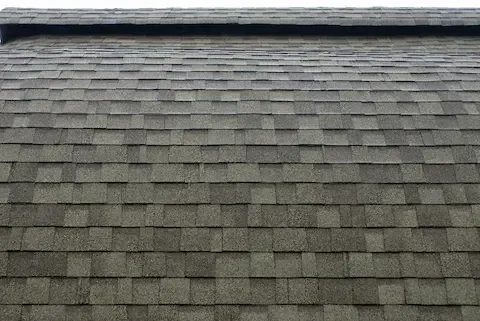
Class 4 Impact Shingles for Hail-Prone Faulkner County
Faulkner County sits squarely in one of the most active hail corridors in the South. Conway and the surrounding communities see significant storm activity every spring and fall, and standard architectural shingles often bear the visible scars of even a moderate hail event. If you have replaced a roof more than once in the past decade, or if you are watching your homeowner's insurance premiums climb year over year, the impact resistance rating on your next set of shingles deserves serious attention before any installation decision is made.
How the Class 4 Impact Rating Actually Works
The classification system used for impact-resistant roofing materials comes from UL 2218, a standard developed by Underwriters Laboratories. Testers drop a two-inch steel ball from twenty feet onto a shingle sample and examine it for cracking, splitting, or fracture. Class 4 is the highest rating on a four-tier scale, meaning the shingle survived that impact without structural damage. Class 1 shingles are tested with a smaller ball from a lower height, and anything in between represents a sliding scale of protection.
For context, a typical architectural shingle without a specific impact designation is not tested under UL 2218 at all. It may perform reasonably in light hail, but there is no standardized verification behind that claim. A labeled Class 4 product has been independently verified under controlled conditions, which is why it carries weight with insurance underwriters and building departments in storm-prone areas like Central Arkansas.
What Hail Actually Does to Standard Shingles in Conway
Faulkner County is not an edge case for hail. The National Weather Service records show repeated hail events across Conway, Vilonia, Greenbrier, and Mayflower, with stone sizes ranging from pea to golf ball on the same calendar year more often than most homeowners realize. Standard three-tab shingles can granule-strip and crack in a single moderate storm. Even dimensional shingles, while thicker, can suffer bruising that weakens the mat and opens the door to moisture infiltration over the following months.
The damage is not always immediately visible. A hail hit that does not punch through the shingle may still fracture the fiberglass mat below the surface. Water then tracks into that weakened zone over time, and the roof begins to fail from the inside out. By the time you notice staining on the ceiling or granule accumulation in the gutters, the mat has often been compromised for a season or more. Class 4 shingles address this by using modified polymer blends or rubberized asphalt that absorbs energy rather than fracturing under impact.
Insurance Discounts for Faulkner County Homeowners
Several major carriers operating in Arkansas offer premium reductions for homes with Class 4 certified roofing materials. The discount varies by insurer and policy structure, but figures in the range of 20 to 30 percent on the wind and hail portion of a premium are not unusual. In a county that sees the storm frequency Faulkner does, that reduction can amount to hundreds of dollars annually, and over the extended lifespan of a quality impact-resistant roof, the cumulative savings often offset a meaningful portion of the upgrade cost.
Before your installation, confirm the certification with your carrier directly. Ask for the specific UL 2218 Class 4 documentation for the product being installed, and make sure your contractor provides that paperwork as part of the job completion package. Some insurers require the manufacturer's certification sheet rather than just a verbal description. Getting this right before the project closes is far easier than tracking it down afterward.
For a deeper look at how material choices affect long-term roof value in Central Arkansas, take a few minutes to read the asphalt shingle roofing breakdown, which covers the full spectrum of asphalt options available in this market.
Product Lines Worth Considering for Conway Homes
Not every shingle marketed as impact resistant carries a Class 4 UL 2218 certification. Some manufacturers use proprietary testing language that sounds similar but does not reflect the standardized independent test. When you are evaluating options, ask your contractor to confirm the UL designation specifically.
Owens Corning offers the Duration STORM line, which uses their SureNail technology with a Class 4 rating. GAF produces the Timberline HDZ with ArmorShield II designation, also carrying Class 4 certification. CertainTeed's Landmark IR is another option with a strong track record in high-hail regions. Each of these products comes with warranty terms that differ on coverage duration and what weather events are included, so comparing warranty documents alongside the impact rating is worth the extra step before committing to a product.
Locally, roofing crews working in Conway and Greenbrier handle these products regularly and can speak to how they perform in actual Faulkner County conditions rather than just laboratory results. That field experience is a practical data point the spec sheet cannot provide.
Common Mistakes When Upgrading to Impact-Resistant Shingles
The most frequent error is treating the Class 4 upgrade as a purchase decision rather than a complete installation decision. A certified shingle installed over a deteriorated deck, with improper underlayment, or without the manufacturer's specified fastener pattern will not perform as rated. UL 2218 tests a product in isolation. Real-world performance depends on the full roofing system being assembled correctly.
A second mistake is assuming all Class 4 products are interchangeable. Weight, texture, and color-fade characteristics vary significantly across brands. Some heavier polymer-modified products require confirming that your home's existing roof structure can support the added load. This is especially relevant in older Conway homes where the original framing was not designed with a heavier roofing system in mind.
Third, homeowners sometimes skip the insurance notification step entirely and lose the discount for the first year or more simply because the carrier was never informed of the upgrade. File the paperwork with your insurer within thirty days of installation completion.
Local Considerations Specific to Faulkner County
Vilonia and Greenbrier in particular have seen significant storm damage in recent years, and many homes in those communities are now on their second or third roof since 2011. Homeowners in those areas often face insurers that are more aggressive about requiring updated roofing materials before extending or renewing coverage. A Class 4 installation in those zip codes may not just be financially advantageous — it may be a factor in maintaining insurability.
Conway's newer subdivisions near Dave Ward Drive and the Highway 286 corridor often feature homes built within the last fifteen years, which means the original shingles are approaching the end of their practical service life right as storm frequency in the region continues to trend upward. Timing a replacement now with a Class 4 product positions those homeowners well for the next decade of Central Arkansas weather.
If you are ready to move forward or want a professional assessment of your current roof's condition, Asphalt Shingle Roofing services in Conway are available for inspections and full replacement projects across Faulkner County.
Making the Case for the Upgrade
Class 4 shingles cost more upfront than standard architectural products. The premium over conventional dimensional shingles typically runs between fifteen and thirty percent depending on brand and market conditions at the time of purchase. Against that cost, weigh the insurance discount compounding over the roof's life, the reduced likelihood of a full replacement following a moderate hail event, and the lower probability of claim-related friction with your insurer after a storm. For most Faulkner County homeowners, the math resolves cleanly in favor of the upgrade when the full picture is considered rather than just the day-one installation invoice.
