Tear Off vs Overlay Roof Replacement for Conway Homes
When your Conway home is due for a new roof, one of the first decisions you'll face is whether to do a full tear-off or layer new shingles over the existing ones. Both approaches can result in a watertight roof, but they differ significantly in cost, longevity, code compliance, and what they reveal — or conceal — about the structure underneath. Understanding the real tradeoffs helps you make the right call before a contractor shows up with a crew and a dumpster.
What Each Method Actually Involves
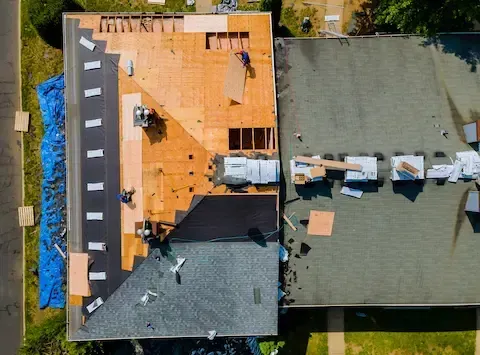
A tear-off replacement means the existing shingles, underlayment, and sometimes flashing are stripped completely down to the roof deck. Once the deck is exposed, the contractor can inspect the sheathing, replace damaged boards, install fresh underlayment, and apply new shingles from scratch. It is the most thorough and widely recommended method.
An overlay — also called a re-roof or layover — involves nailing a second layer of shingles directly over the first. No stripping, no dumpster full of old materials, no deck inspection. The old shingles stay in place and act as a base for the new ones. It is faster and less expensive upfront, but those savings come with conditions.
Arkansas Building Code and Conway Permit Requirements
Before you decide based on price alone, check what the code actually allows. Arkansas generally follows the International Residential Code, which permits a maximum of two shingle layers on a residential roof. If your Conway home already has two layers in place — which is common in older neighborhoods throughout Faulkner County — an overlay is not an option. A full tear-off becomes mandatory by code, and any reputable contractor will pull a permit and inspect accordingly.
Skipping a permit to save money on a layover job creates problems at resale. Home inspectors routinely flag unpermitted roofing work, and buyers can walk or demand a price reduction that exceeds what you saved. In Conway's active real estate market, where homes in established subdivisions like Oak Trace and Breckenridge move quickly, a clean permit history matters.
Lifespan and Long-Term Performance
A properly installed tear-off roof with quality architectural shingles can last 25 to 30 years or more in Central Arkansas's climate. Overlays typically shorten that expectation. Heat builds up between the two shingle layers, which accelerates degradation in the top layer. Arkansas summers, with extended stretches of 95-plus-degree days and high humidity, are particularly hard on layered roofs. You may find the second layer shows significant wear in 15 years or fewer.
There is also the structural question. Old shingles that are cupped, curled, or buckled create an uneven surface beneath the new layer. That unevenness telegraphs through to the new shingles, leading to irregular seating, nail pops, and vulnerability to wind uplift. Conway sits in a region where spring storm systems regularly generate high winds and hail, and a roof that is not seated flat against a sound deck is more susceptible to both.
What a Tear-Off Reveals About Your Roof Deck
One of the strongest arguments for a full tear-off is what it uncovers. Decking damage — rotted sheathing, delaminated OSB, areas softened by chronic slow leaks — is completely invisible beneath shingles. When a contractor lays a second layer over damaged decking, that structural problem stays hidden and continues to worsen. You will eventually deal with it, but by then you may be looking at interior water damage as well.
In Conway homes built between the 1970s and early 1990s, particularly in older sections of town closer to downtown and along Donaghey Avenue, original roof decking varies widely in quality. A tear-off gives you the opportunity to replace problem sections for a few hundred dollars before they become a multi-thousand-dollar repair. That is money well spent when the alternative is finding out about deck rot through a ceiling stain.
Warranty Implications You Should Read Carefully
Most major shingle manufacturers — GAF, Owens Corning, CertainTeed — offer their strongest warranties only on full tear-off installations. Some void enhanced warranties entirely when shingles are installed over an existing layer. If you are paying for a premium shingle product expecting a 30-year warranty, confirm with your contractor that the installation method qualifies. An overlay that voids the manufacturer warranty leaves you with a shorter-lived roof and no coverage backstop.
For Roof Replacement projects where you are investing in quality materials and workmanship, protecting that investment through a proper tear-off and a valid manufacturer warranty is almost always the smarter financial move over a five-to-ten-year horizon.
Cost Comparison: Upfront vs. Total Cost of Ownership
An overlay typically costs 20 to 30 percent less than a tear-off on the same house. For a 2,000-square-foot Conway home, that might translate to saving $1,500 to $3,000 at installation. However, if the overlay needs replacement in 15 years rather than 25, you are absorbing another full roofing cost — plus the tear-off you avoided the first time, since two layers will then be in place. Over a 30-year window, the tear-off is almost always the lower total cost.
The overlay's cost advantage shrinks further when you factor in the inability to address deck issues, the reduced warranty coverage, and the potential complications at resale. If your budget is genuinely tight, discuss phased options with your contractor — sometimes replacing the most critical sections first is a better answer than a full layover that delays the inevitable.
When an Overlay Might Be Acceptable
There are legitimate scenarios where an overlay makes sense. If your roof has only one existing layer, the deck is confirmed to be sound, the shingles are lying flat, and you plan to sell the property within five to seven years, a quality overlay installed to code can be a reasonable short-term solution. It should never be positioned as a long-term equivalent to a tear-off — but as a bridge strategy with eyes open, it has its place.
To get a complete picture of what the replacement process involves from initial inspection through final walkthrough, read our full roof replacement walkthrough for a step-by-step breakdown of what homeowners in Conway should expect.
Making the Right Call for Your Home
For most Conway homeowners planning to stay in their homes long-term, a full tear-off is the right answer. It gives you a clean slate, confirms the structural integrity of your deck, qualifies you for the best manufacturer warranties, and delivers the full lifespan from your new shingles. The upfront cost is higher, but the total value over time is substantially better than patching over problems with a second layer.
Before signing any contract, confirm how many shingle layers are currently on your roof, ask whether the contractor will inspect and document the deck condition, and verify which warranty coverage applies to the installation method being proposed. Those three questions will tell you most of what you need to know about whether you are getting a genuine roof replacement or a temporary fix dressed up as one.
