Attic Insulation and Roof Ventilation in Conway Arkansas
In Conway, Arkansas, summer attic temperatures can climb past 150°F on a clear July afternoon. That trapped heat radiates down through your ceiling, forces your air conditioner to work harder, and accelerates the breakdown of shingles from the underside. The fix is not one system but two working in coordination: attic insulation that slows heat transfer into your living space, and roof ventilation that purges superheated air before it builds up. Get both right and you extend the life of your roof, reduce energy bills, and keep interior temperatures manageable through the long Arkansas cooling season.
Why Conway's Climate Demands Both Systems Together
Conway sits in Faulkner County where humid subtropical conditions deliver hot, sticky summers and winters cold enough to produce ice dam conditions in poorly ventilated attics. That combination puts unusual stress on roofing systems. During summer, intense solar gain heats the roof deck. If ventilation is inadequate, heat pools in the attic and presses downward through insulation into conditioned living space. In winter, warm interior air leaks upward into an under-insulated attic, meets cold roof deck temperatures, and can create the freeze-thaw cycles that damage shingles and gutters along the eaves.
Neither problem is solved by insulation alone or ventilation alone. Insulation without ventilation leaves the attic as an oven that bakes your shingles from below. Ventilation without adequate insulation lets conditioned air escape freely in both seasons, raising your utility bills and reducing comfort. The two systems are designed to complement each other, and any contractor evaluating your roof in Conway should be assessing both simultaneously.
Understanding R-Value Requirements for Arkansas Attics
The U.S. Department of Energy places Conway in Climate Zone 3, which recommends attic insulation of R-38 to R-60 for most homes. Older homes in established Conway neighborhoods like Oak Meadows or near downtown frequently have original insulation that falls well below this range, sometimes as low as R-11 from construction in the 1970s and 1980s.
Blown-in fiberglass or cellulose insulation are common choices for attic retrofits in this region. Blown-in products fill irregular joist bays and work around existing obstacles like HVAC ducts and electrical wiring without leaving gaps. Spray foam is used along the roof deck in unvented attic assemblies but requires a different ventilation strategy and is typically specified only in new construction or significant renovations.
When adding insulation, it is critical to maintain clear pathways at the eave baffles. Blocking soffit vents with insulation is one of the most common installation errors and it directly undermines the ventilation system the insulation is supposed to partner with.
How Soffit and Ridge Ventilation Work in Arkansas Conditions
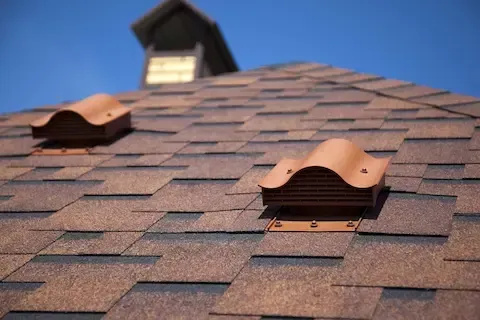
A balanced ventilation system relies on intake at the soffits and exhaust at or near the ridge. Cool outside air enters at the low point of the roof along the soffits, flows upward along the underside of the roof deck, and exits through ridge vents or high-mounted static vents at the peak. This continuous airflow pulls heat and moisture out of the attic space throughout the day and night.
The standard calculation used by most roofing contractors is one square foot of net free ventilation area for every 150 square feet of attic floor space, often referred to as the 1:150 ratio. Some codes allow a 1:300 ratio when the system is balanced between intake and exhaust and when a vapor barrier is present, but 1:150 remains the conservative benchmark that performs well in high-humidity climates like central Arkansas.
In Conway's older housing stock, inadequate soffit venting is the most frequent deficiency. Continuous soffit vent strips are more effective than individual round vents because they provide consistent intake across the full eave length. If your home has enclosed or painted-over soffits, a roof inspection should include an assessment of whether intake is sufficient before any ridge ventilation is added or upgraded.
For Roof Ventilation that performs year-round in Arkansas conditions, the intake-to-exhaust balance matters more than the total number of vents installed.
Common Mistakes That Undermine the System
Several mistakes appear repeatedly on Conway homes and each one reduces the effectiveness of both insulation and ventilation.
- Mixing exhaust vent types at different heights. Installing both a ridge vent and static box vents on the same roof slope can cause short-circuiting, where air exits one vent type and re-enters through another, bypassing the attic entirely.
- Over-insulating without baffles. Adding blown-in insulation over existing insulation is effective only if rafter baffles are in place to keep a clear airway from the soffit to the attic space above.
- Assuming more vents equal better airflow. Ventilation effectiveness depends on balance and placement, not sheer quantity. Adding ridge vents to a home with blocked soffits accomplishes nothing and can make moisture problems worse.
- Ignoring attic air sealing. Before adding insulation, penetrations around light fixtures, plumbing stacks, and HVAC chases should be sealed. Uncontrolled air movement through these gaps carries moisture into the attic and defeats even correctly rated insulation.
Seasonal Considerations for Conway Homeowners
Spring is the most practical time to assess your attic in Conway. Temperatures are mild enough for a thorough inspection before summer heat makes attic access punishing. A visual check in March or April can reveal moisture staining on rafters from winter condensation, compressed or settled insulation, and any displaced baffles that might have shifted during the previous year's heavy storms.
Fall gives you a second window before the heating season begins. At that point the focus shifts to ensuring that air sealing and insulation levels are adequate to prevent conditioned heat from rising out of the living space into the attic during December and January cold snaps. Conway does experience freezing temperatures, and the thermal boundary between conditioned space and the attic should be as continuous as possible.
If you want to understand how these systems interact in more detail before scheduling a professional evaluation, our our attic ventilation breakdown covers the specifics of how intake and exhaust work together across different roof types.
When to Call a Roofing Professional
Some attic conditions are straightforward enough for a homeowner to evaluate with a flashlight and a tape measure. But certain situations call for professional assessment. If you see daylight entering through the soffits unevenly, notice moisture staining or mold on the underside of the roof deck, have utility bills that spike unusually in July and August, or have a roof older than fifteen years that has never had a ventilation inspection, a qualified Conway roofing contractor should evaluate the full system rather than just one component.
Proper attic insulation and ventilation are not glamorous upgrades, but they are among the highest-return investments you can make in a Conway home. They protect your shingles from premature failure, reduce the load on your HVAC system during peak summer months, and create conditions that extend the life of every other component in your roofing assembly.
