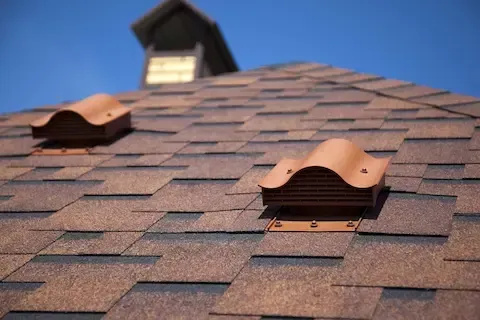
Attic Roof Ventilation in Conway AR and Faulkner County
Proper attic roof ventilation serves as the invisible foundation of your roofing system's longevity and performance. Without adequate airflow through your attic space, trapped heat and moisture create conditions that accelerate shingle deterioration, promote mold growth, and drive up energy costs throughout the year. Understanding how different ventilation components work together helps you make informed decisions about protecting your Conway home investment.
Ridge and Soffit Ventilation Systems
Ridge vents installed along your roof's peak work in partnership with soffit vents under your eaves to create natural convection currents. Cool air enters through soffit vents, travels up through your attic space, and exits through ridge vents, carrying away excess heat and moisture. This continuous airflow cycle prevents temperature extremes that cause shingles to expand and contract excessively.
Soffit vents require unobstructed pathways from the eave edge to the ridge. Insulation blocking these channels defeats the entire system, creating dead air pockets where moisture accumulates. Professional installation ensures proper baffle placement maintains these crucial air channels while maximizing insulation effectiveness.
Ridge vents come in various styles, from low-profile units that blend seamlessly with your roofline to more prominent designs that maximize airflow capacity. The key lies in matching ridge vent capacity to your attic's square footage and ensuring adequate intake ventilation balances the system. Not sure which exhaust type fits your roof shape? See our ridge vs box vent comparison for Faulkner County homes.
Gable and Turbine Ventilation Options
Gable vents positioned in your home's end walls provide cross-ventilation that works particularly well in homes with simple rooflines. These vents allow air to flow horizontally through the attic space, though they become less effective in complex roof designs with multiple levels or intersecting planes.
Turbine vents harness wind energy to create active exhaust ventilation. As wind turns the turbine, it draws air up and out of your attic space more aggressively than static vents. However, turbines require consistent wind to function effectively and may create noise in certain weather conditions.
Combining different ventilation types requires careful planning to avoid conflicting airflow patterns. Mixing gable vents with ridge vents, for example, can disrupt the natural intake-to-exhaust flow and reduce overall system efficiency. Roof Ventilation professionals assess your specific roof configuration to recommend the most effective combination.
Calculating Proper Ventilation Requirements
The 1:300 rule provides the foundation for ventilation calculations, requiring one square foot of ventilation for every 300 square feet of attic space. However, this basic formula assumes perfect conditions that rarely exist in real installations. Factors like insulation type, roof color, and local climate patterns all influence actual ventilation needs.
Intake and exhaust ventilation should balance at roughly 50/50 ratios for optimal performance. Too much exhaust ventilation without adequate intake creates negative pressure that can draw conditioned air from your living spaces. Conversely, excessive intake without sufficient exhaust allows hot air to stagnate in your attic.
Faulkner County's humid subtropical climate demands particular attention to moisture removal capacity. Summer temperatures regularly exceed 90°F with high humidity levels, creating conditions where inadequate ventilation leads to rapid mold growth and structural damage.
Common Ventilation Installation Mistakes
Blocked soffit vents represent the most frequent ventilation failure point. Paint buildup, debris accumulation, or insulation covering intake vents eliminates the foundation of your ventilation system. Regular inspection and maintenance keeps these pathways clear and functional.
Installing ventilation components without considering the complete system creates inefficiencies that waste money and compromise protection. Adding more exhaust vents without increasing intake capacity, for example, creates imbalanced airflow that reduces overall effectiveness.
Improper sealing around ventilation penetrations allows conditioned air to escape into unconditioned attic space, increasing energy costs and reducing indoor comfort. Professional installation includes proper flashing and sealing techniques that maintain your home's thermal boundary.
Arkansas Climate Considerations
Conway's hot, humid summers create extreme attic temperatures that can exceed 150°F without proper ventilation. These temperatures accelerate asphalt shingle aging, cause premature granule loss, and create thermal shock that leads to cracking and curling.
Winter conditions in central Arkansas, while milder than northern climates, still present ice dam risks during occasional freezing periods. Proper ventilation maintains consistent roof surface temperatures that prevent the freeze-thaw cycles responsible for ice dam formation.
Spring and fall weather patterns bring frequent temperature swings that challenge ventilation systems. Adequate airflow helps your attic adjust to these changes without creating condensation problems that promote mold growth and wood rot. Ventilation and insulation work together, so see how attic insulation and roof ventilation pair up in Conway.
Local wind patterns influence ventilation effectiveness, with prevailing southerly winds providing natural assistance to properly designed systems. Understanding the commercial roofing system overview helps property managers apply similar principles to larger structures throughout the region.
Professional Assessment and Installation
Ventilation system design requires understanding your home's unique characteristics, from roof pitch and complexity to existing insulation conditions. Professional assessment identifies specific challenges like cathedral ceilings, converted attics, or architectural features that affect airflow patterns.
Proper installation involves more than simply cutting holes and mounting vents. Professionals coordinate ventilation placement with structural elements, ensure adequate clearances around penetrations, and integrate new components with existing roofing materials.
Quality ventilation components resist Arkansas weather extremes while maintaining consistent performance over decades. Professional installers select materials and designs suited to local conditions, avoiding products that fail prematurely in high heat and humidity environments.
Long-term Performance and Maintenance
Well-designed ventilation systems operate maintenance-free for years, but periodic inspection ensures continued effectiveness. Check soffit vents for debris blockage, inspect ridge vents for damage or displacement, and verify that insulation hasn't migrated to block air pathways.
Seasonal temperature monitoring helps identify ventilation problems before they cause expensive damage. Attic temperatures that remain within 20°F of outdoor temperatures indicate effective ventilation, while extreme temperature differentials suggest system improvements are needed.
Energy bill analysis reveals ventilation system effectiveness through cooling cost patterns. Properly ventilated homes maintain more consistent indoor temperatures with lower energy consumption, particularly during Arkansas's demanding summer months.
Your investment in proper attic ventilation pays dividends through extended shingle life, reduced energy costs, and improved indoor comfort. The combination of professional design, quality installation, and periodic maintenance ensures your ventilation system provides decades of reliable performance while protecting your Conway home from the challenges of Arkansas climate extremes.
