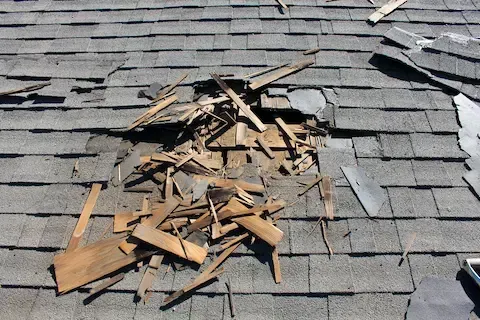
Wind Damage Roof Repair After Spring Conway AR Storms
Spring in Conway, Arkansas has a way of arriving fast and leaving damage behind. One afternoon the sky goes green, the wind picks up past 50 miles per hour, and by evening you're standing in your yard looking at shingles scattered across the lawn. What you see on the ground is only part of the problem. The shingles still on your roof may be lifted, cracked, or separated from the underlayment in ways that won't be obvious until the next rain front rolls through from the southwest. Understanding what wind actually does to a residential roof — and why timing matters so much here in Faulkner County — helps you make better decisions before more water gets in.
How Spring Wind Loads Affect Asphalt Shingles in Arkansas
Asphalt shingles are designed to handle sustained wind loads up to a manufacturer-rated threshold, typically 90 to 130 miles per hour for modern three-tab and architectural styles. But spring storms in central Arkansas don't always need to hit that threshold to cause damage. The real threat is a combination of wind speed, wind direction change, and the age of the adhesive strips that bond shingle tabs to the course below.
When a fast-moving storm system pushes through the Arkansas River Valley, it often produces wind that shifts direction rapidly. That directional change creates uplift pressure along roof edges and ridge lines that is far more destructive than a steady wind at the same speed. The edge courses and the ridge cap take the first hit. Once those are compromised, each subsequent rain event drives water horizontally into the exposed nail lines and between courses.
In Conway neighborhoods like Oak Meadows, Westwood, or any subdivision with homes built in the 1990s and early 2000s, the sealant strips on older shingles have already softened and re-bonded through years of summer heat cycles. That makes them more vulnerable to being peeled back by a hard northwest wind than a newer roof would be.
Specific Damage Patterns to Look For After a Storm
Not all wind damage looks like missing shingles. Some of the costlier damage patterns are subtle and only become apparent under inspection. When you're assessing your roof after a spring storm, there are several distinct failure modes worth understanding.
- Lifted tab edges: Shingles that have been partially peeled back and then re-laid by the wind. They look attached but the sealant bond is broken, and they will lift again in the next storm.
- Ridge cap displacement: The ridge cap is the highest-exposure point on the roof. Cap shingles that have shifted even slightly allow water infiltration directly into the deck and attic framing below.
- Exposed underlayment: Where shingles have blown off entirely, the felt or synthetic underlayment becomes visible. Underlayment is a secondary barrier, not a permanent solution. UV exposure and standing water will degrade it within days to weeks.
- Creased or folded shingles: High-speed wind can crease shingles without removing them. The crease breaks the fiberglass mat inside the shingle, leaving a stress fracture that will eventually crack and let water through.
- Flashing separation: Around chimneys, pipe boots, and valley transitions, wind can pull flashing away from sealed edges. This is one of the most common sources of interior leaks following a storm.
If you're in the Conway area and you experienced gusts above 45 miles per hour during a recent storm, a roof inspection is warranted even if you can't see obvious missing shingles from the street.
Why the Window Between Storms Matters So Much
Spring weather in Faulkner County rarely gives homeowners a long break between storm systems. A front that passes through on a Wednesday is often followed by another by Saturday. That compressed timeline is the core reason wind damage roof repair Conway residents need moves quickly from inspection to repair.
Exposed underlayment, lifted shingles, and displaced ridge cap create compounding water intrusion risk with every subsequent rain event. The first storm might not produce a ceiling stain. The second one might. By the third, you're looking at saturated decking, potential mold growth in the attic insulation, and repair costs that have multiplied from what a timely fix would have required.
For Storm Damage Roof Repair after a major event, the priority is getting a tarp or emergency covering in place over any fully exposed areas while a proper repair is scheduled. This is not a long-term fix, but it buys the few days needed to source materials and mobilize a crew without allowing further interior damage.
Working With Insurance After Wind Damage in Arkansas
Arkansas homeowners insurance policies generally cover wind damage as a standard peril. But the claims process has specific requirements that can affect how quickly repairs get approved and paid. A few practical points apply to most Conway-area claims.
Document everything before any temporary repairs are made. That means photographs of shingles on the ground, visible damage to the field of the roof from a safe vantage point, any interior water staining, and the condition of gutters, fascia, and flashing. Date-stamped photos taken the day of the storm or the morning after carry more weight with adjusters than photos taken a week later.
Your insurance adjuster will schedule an inspection, but adjuster timelines after a major storm event can stretch to several weeks if the storm affected a large area of Faulkner County or the broader Conway metro. A written estimate from a licensed Arkansas roofing contractor, completed before the adjuster visit, gives the adjuster a clear scope to work from and reduces the likelihood of underpayment on legitimate damage items.
You can review our storm damage repair coverage for more detail on how we approach insurance work and what the documentation process typically looks like for Conway homeowners.
Common Mistakes Homeowners Make After Spring Wind Events
The weeks following a significant spring storm produce a predictable set of errors that end up costing Conway homeowners more money than the original damage would have required.
- Waiting to see if a leak develops: Interior leaks are a lagging indicator. By the time you see a stain, water has already been present in the roof system for some time. Inspect first, don't wait for symptoms.
- Hiring a contractor who appeared after the storm: Post-storm canvassing by out-of-state or unlicensed crews is common in central Arkansas following significant weather events. Verify that any contractor you hire carries a current Arkansas contractor license and has a verifiable local presence.
- Delaying the insurance claim: Most policies have a reporting window. Waiting several weeks to file can complicate the claim even when the damage is legitimate.
- Replacing only the missing shingles: If a roof has multiple lifted, creased, or displaced shingles across several field sections, spot replacement of only the fully missing shingles leaves active vulnerabilities in place.
What a Proper Wind Damage Repair Includes
A complete repair after a spring wind event in Conway should address the full scope of compromised material, not just what's visibly missing. That includes resetting or replacing any lifted courses with new sealant applied under the tabs, replacing displaced or damaged ridge cap from end to end if more than two or three sections have been affected, re-securing or replacing separated flashing at all penetrations, and inspecting the deck for any soft spots or moisture infiltration at nail patterns.
The goal is to restore the roof to a condition that performs through the remainder of Arkansas's spring storm season — which in Faulkner County typically runs from March through early June — without requiring another emergency call after the next line of thunderstorms moves through.
